Highlights
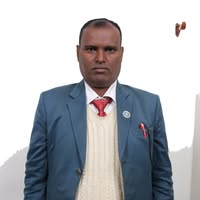
Dr. Chandradip Kumar Yadav is a Nepali academician born on 28 May 1984 in Dhanusha, Nepal. He holds Nepali nationality and is married. His permanent address is Chorakoyalpur-3, Dhanusha, and he currently resides at Amrit Campus, Tribhuvan University, Kathmandu. He completed his Ph.D. in Physical Chemistry in 2025 with a research focus on mixed surfactant interactions, dye behavior, and corrosion protection. He also holds an M.Sc. in Physical Chemistry, B.Sc. in PCM, a B.Ed., and a higher secondary education from reputable institutions. Dr. Yadav has over a decade of teaching experience at Tribhuvan University and affiliated campuses. He has served as teaching assistant, assistant lecturer, lecturer, hostel warden, and director of a coaching center. Currently, he is a lecturer at Amrit Campus, TU, Kathmandu. His research interests include surface chemistry, surfactants, corrosion science, and materials science. He is a Life Member of the Nepal Chemical Society and a member of RECOST and Amnesty International. He has published numerous international and national research articles in high-impact journals, including Q1 and Q2 indexed publications. His work focuses on corrosion inhibition, surfactant-dye interactions, and micellization behavior. He has presented research in many national and international conferences and received multiple awards, including the Young PhD Fellowship and the Indian Science Research Fellowship. Dr. Yadav has authored academic books on physical chemistry, nanoscience, and instrumental methods. He has supervised master's and PhD students in advanced chemistry research. He has organized scientific workshops and national academic conferences. He has participated in several training programs related to research methodology, patents, and scientific writing. His technical skills include spectroscopy, electrochemical analysis, chemical software tools, and laboratory instrumentation. He is fluent in Nepali, English, Hindi, and Maithili. He has contributed to community service, including blood donation initiatives. His achievements highlight a strong commitment to teaching, research, innovation, and scientific leadership.
Award Received
Collaborations
Strong Collaboration with national and international
Top 10 Publications: